 Capresso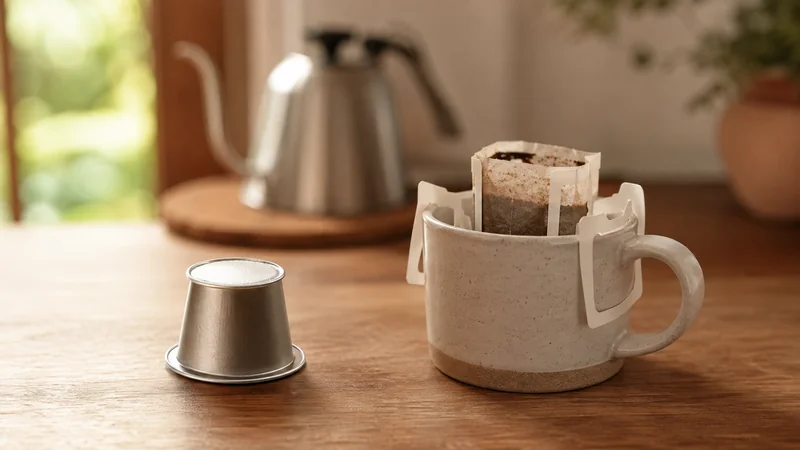
คำถามที่เจอบ่อยคือควรใช้กาแฟแคปซูลหรือดริปแบ็กดี ทั้งสองอย่างชงง่ายและใช้ครั้งเดียวทิ้งเหมือนกัน แต่ให้กาแฟคนละแบบสนิท จึงไม่ควรเลือกด้วยราคาอย่างเดียว
ต่างกันที่วิธีสกัด
ดริปแบ็กคือกาแฟกรอง น้ำร้อนไหลผ่านผงกาแฟด้วยแรงโน้มถ่วง ได้กาแฟใส บอดี้เบา ชูกลิ่นและความเปรี้ยวของเมล็ด ส่วนแคปซูลใช้แรงดันสูงอัดน้ำผ่านผงที่บดละเอียดกว่า ได้เอสเพรสโซเข้มข้น มีเครม่า และเอาไปทำลาเต้ มอคค่า หรือกาแฟเย็นต่อได้
เทียบให้เห็นภาพ
| หัวข้อ | กาแฟแคปซูล | ดริปแบ็ก |
|---|---|---|
| ประเภทกาแฟที่ได้ | เอสเพรสโซ เข้ม มีเครม่า | กาแฟกรอง ใส บอดี้เบา |
| ต้องมีเครื่อง | ต้องมี | ไม่ต้อง มีแค่น้ำร้อนกับแก้ว |
| เวลาต่อแก้ว | ราว 30 วินาที | ราว 3 นาที ต้องรินน้ำเป็นรอบ |
| ความสม่ำเสมอ | เหมือนกันทุกแก้ว | ขึ้นกับวิธีรินและอุณหภูมิน้ำ |
| ต่อยอดเป็นเมนูนม | ได้ดี ลาเต้ มอคค่า กาแฟเย็น | ทำได้ยาก รสจะจางเมื่อใส่นม |
| พกพา | ต้องมีเครื่องที่ปลายทาง | พกได้ทุกที่ที่มีน้ำร้อน |
| อายุเก็บ | ปิดผนึกสุญญากาศ เก็บได้นานกว่า | ซองกระดาษ ผงสัมผัสอากาศง่ายกว่า |
เลือกดริปแบ็กเมื่อไหร่
- ยังไม่อยากลงทุนเครื่อง หรือใช้แค่นาน ๆ ครั้ง
- ชอบกาแฟดำใส ๆ กลิ่นชัด แบบ Single Origin
- ต้องเดินทางบ่อย โรงแรมมีแค่กาต้มน้ำ
เลือกกาแฟแคปซูลเมื่อไหร่
- ดื่มทุกวันและอยากได้รสเดิมทุกแก้ว ไม่ต้องลุ้น
- ชอบเมนูนม ลาเต้ คาปูชิโน่ หรือกาแฟเย็น
- ตอนเช้ามีเวลาน้อย กดปุ่มเดียวจบ
- ในบ้านมีหลายคนชอบคนละรส เก็บหลายรสพร้อมกันได้โดยไม่ต้องเปิดถุงเมล็ดทิ้งไว้
ต้นทุนต่อแก้ว
ดริปแบ็กมักถูกกว่าต่อซองเมื่อซื้อปลีก แต่แคปซูลซื้อเป็นแพ็กใหญ่แล้วราคาต่อแคปซูลลดลงมาก และไม่ต้องนับค่ากระดาษกรองหรือของเสีย ตัวเลขจริงเทียบได้ที่บทความต้นทุนต่อแก้ว และบทความเทียบราคาต่อแคปซูล
สรุป
ถ้าอยากได้กาแฟใสสไตล์ดริปและไม่อยากมีเครื่อง ดริปแบ็กตอบโจทย์กว่า แต่ถ้าดื่มทุกวัน ชอบเมนูนม หรืออยากได้รสคงที่โดยไม่ต้องฝึกรินน้ำ ระบบแคปซูลคุ้มกว่าในระยะยาว อยากเทียบกับกาแฟแบบอื่นเพิ่ม ดูได้ที่บทความเทียบกับกาแฟดริป และบทความเทียบกับกาแฟสำเร็จรูป
A common question is whether to use capsule coffee or drip bags. Both are single-use and easy, but they produce completely different drinks — so price alone is the wrong way to choose.
The difference is the extraction
A drip bag is filter coffee: hot water passes through the grounds by gravity, giving a clear, light-bodied cup that highlights the aroma and acidity of the bean. A capsule uses high pressure through a much finer grind, producing a concentrated espresso with crema that you can turn into a latte, mocha or iced coffee.
Side by side
| Item | Capsule coffee | Drip bag |
|---|---|---|
| Type of coffee | Espresso, intense, with crema | Filter coffee, clear, light body |
| Machine needed | Yes | No — just hot water and a cup |
| Time per cup | About 30 seconds | About 3 minutes of staged pouring |
| Consistency | Identical every cup | Depends on pour and water temperature |
| Milk drinks | Excellent — latte, mocha, iced | Difficult; flavour thins out with milk |
| Portability | Needs a machine at the destination | Anywhere with hot water |
| Shelf life | Sealed, keeps longer | Paper sachet, grounds meet air sooner |
Choose drip bags when
- You do not want to buy a machine, or drink coffee only occasionally
- You prefer clear black coffee with pronounced single-origin aroma
- You travel often and hotels only have a kettle
Choose capsules when
- You drink daily and want the same cup every time
- You like milk drinks, or iced coffee
- Mornings are rushed and one button is all you have time for
- Several people at home like different flavours and you do not want open bags of beans going stale
Cost per cup
Drip bags are often cheaper per sachet at retail, but capsules drop sharply in price when bought in larger packs, with no filter paper or waste to count. See the real numbers in our cost per cup article and our price per capsule comparison.
Summary
If you want clear filter-style coffee with no machine, drip bags win. If you drink daily, like milk drinks, or want consistency without learning to pour, capsules are better long term. For more comparisons see capsules vs drip coffee and capsules vs instant coffee.