 Capresso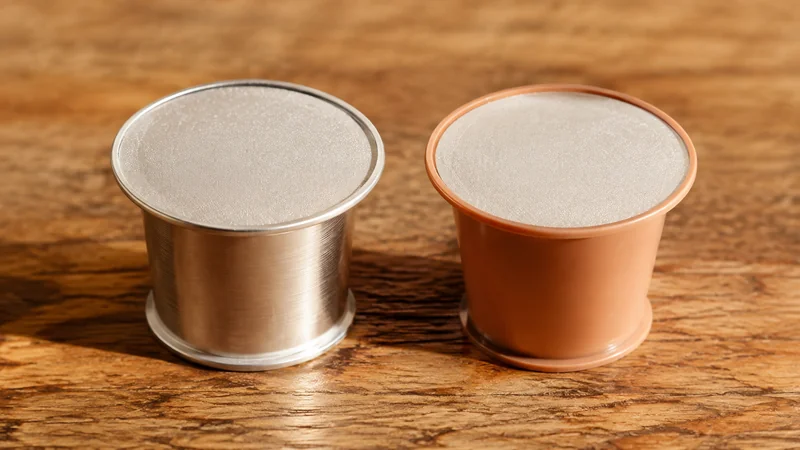
แคปซูลหน้าตาคล้ายกันแต่ทำจากวัสดุคนละอย่าง และวัสดุนี้มีผลมากกว่าที่คิด ทั้งกับความหอมที่เหลืออยู่ ความร้อนตอนสกัด และการทิ้งหลังใช้ บทความนี้เทียบให้เห็นภาพ
เทียบกันตรง ๆ
| หัวข้อ | อลูมิเนียม | พลาสติก |
|---|---|---|
| กันอากาศ/ออกซิเจน | ✅ กันได้เกือบสมบูรณ์ | 🟡 ซึมผ่านได้ทีละน้อยตามเวลา |
| กันแสง | ✅ ทึบแสง 100% | 🟡 แล้วแต่เนื้อพลาสติก |
| นำความร้อน | ✅ ดี ช่วยให้สกัดสม่ำเสมอ | 🟡 นำความร้อนได้น้อยกว่า |
| อายุการเก็บ | ยาวกว่า รสคงที่กว่า | สั้นกว่าเมื่อเทียบกันที่เงื่อนไขเดียวกัน |
| รีไซเคิล | ✅ อลูมิเนียมรีไซเคิลได้ไม่จำกัดรอบ | 🟡 แล้วแต่ชนิดพลาสติกและระบบคัดแยก |
| ต้นทุน | สูงกว่า | ถูกกว่า |
ทำไมการกันอากาศถึงสำคัญกับรส
ศัตรูของกาแฟบดคือออกซิเจน เพราะทำให้น้ำมันในเมล็ดเสื่อมและกลิ่นหอมระเหยหายไป กาแฟบดที่วางในอากาศเปิดจะเสียกลิ่นภายในไม่กี่วัน แคปซูลที่กันอากาศได้ดีกว่าจึงรักษาความหอมได้ยาวกว่าอย่างมีนัยสำคัญ นี่คือเหตุผลหลักที่แคปซูลระดับพรีเมียมส่วนใหญ่เลือกอลูมิเนียม
แล้วพลาสติกไม่ดีเลยหรือ
ไม่ใช่ — พลาสติกเกรดอาหารที่ผลิตดีก็ปลอดภัยและใช้งานได้ปกติ ข้อได้เปรียบคือต้นทุนต่ำกว่า จึงมักเจอในแคปซูลราคาประหยัด ถ้าคุณดื่มหมดเร็วภายในไม่กี่สัปดาห์ ความต่างเรื่องการเก็บกลิ่นก็แทบไม่รู้สึก ประเด็นจะชัดขึ้นเมื่อเก็บนาน
ดูยังไงว่าเป็นแบบไหน
- บีบเบา ๆ — อลูมิเนียมจะยุบแล้วคงรูปบุ๋มไว้ พลาสติกจะเด้งกลับ
- ดูขอบฟอยล์ — แคปซูลอลูมิเนียมมักเป็นเนื้อโลหะทั้งใบต่อเนื่องถึงขอบ
- ดูข้างกล่อง — ผู้ผลิตส่วนใหญ่ระบุวัสดุและสัญลักษณ์รีไซเคิลไว้
แคปซูลของ Capresso เป็นอลูมิเนียม ซึ่งรีไซเคิลได้ วิธีจัดการหลังใช้อ่านได้ที่บทความรีไซเคิลแคปซูล และถ้าสงสัยเรื่องการนำกลับมาใช้ซ้ำ ดูที่บทความใช้แคปซูลซ้ำ
สรุป
อลูมิเนียมชนะเรื่องการรักษากลิ่น การนำความร้อน และการรีไซเคิล ส่วนพลาสติกได้เปรียบเรื่องต้นทุน ถ้าซื้อทีละมากแล้วทยอยดื่มหลายเดือน ความต่างจะเห็นชัด แต่ถ้าดื่มหมดไว จะรู้สึกต่างกันน้อย อยากรู้ว่าเก็บได้นานแค่ไหน อ่านต่อที่บทความการเก็บรักษา หรือดูรสทั้งหมดที่หน้ารสชาติ
Capsules look alike but are made from different materials, and the material matters more than you would guess — for how much aroma survives, for extraction, and for disposal.
Side by side
| Aspect | Aluminium | Plastic |
|---|---|---|
| Oxygen barrier | ✅ Near-total | 🟡 Slowly permeable over time |
| Light barrier | ✅ Completely opaque | 🟡 Depends on the resin |
| Heat conduction | ✅ Good, helps even extraction | 🟡 Conducts less |
| Shelf life | Longer, more stable flavour | Shorter under the same conditions |
| Recycling | ✅ Aluminium recycles indefinitely | 🟡 Depends on resin and local sorting |
| Cost | Higher | Lower |
Why the oxygen barrier matters for taste
The enemy of ground coffee is oxygen — it degrades the oils and lets aromatics escape. Ground coffee left in open air loses its aroma within days. A better barrier keeps that aroma significantly longer, which is why most premium capsules use aluminium.
So is plastic bad?
No. Well-made food-grade plastic is safe and works fine, and it costs less, which is why budget capsules often use it. If you finish a box within a few weeks you will barely notice the difference; it shows up over longer storage.
How to tell which you have
- Squeeze gently — aluminium dents and stays dented; plastic springs back.
- Look at the rim — aluminium capsules are usually continuous metal right to the edge.
- Check the box — most makers state the material and recycling mark.
Capresso capsules are aluminium and recyclable — see our recycling guide, or the reusing capsules article if you were wondering about refilling.
Summary
Aluminium wins on aroma protection, heat conduction and recyclability; plastic wins on cost. Buy in bulk and drink over months and the difference is clear; drink quickly and it barely registers. For shelf life, read our storage guide, or browse all flavors.