 Capresso
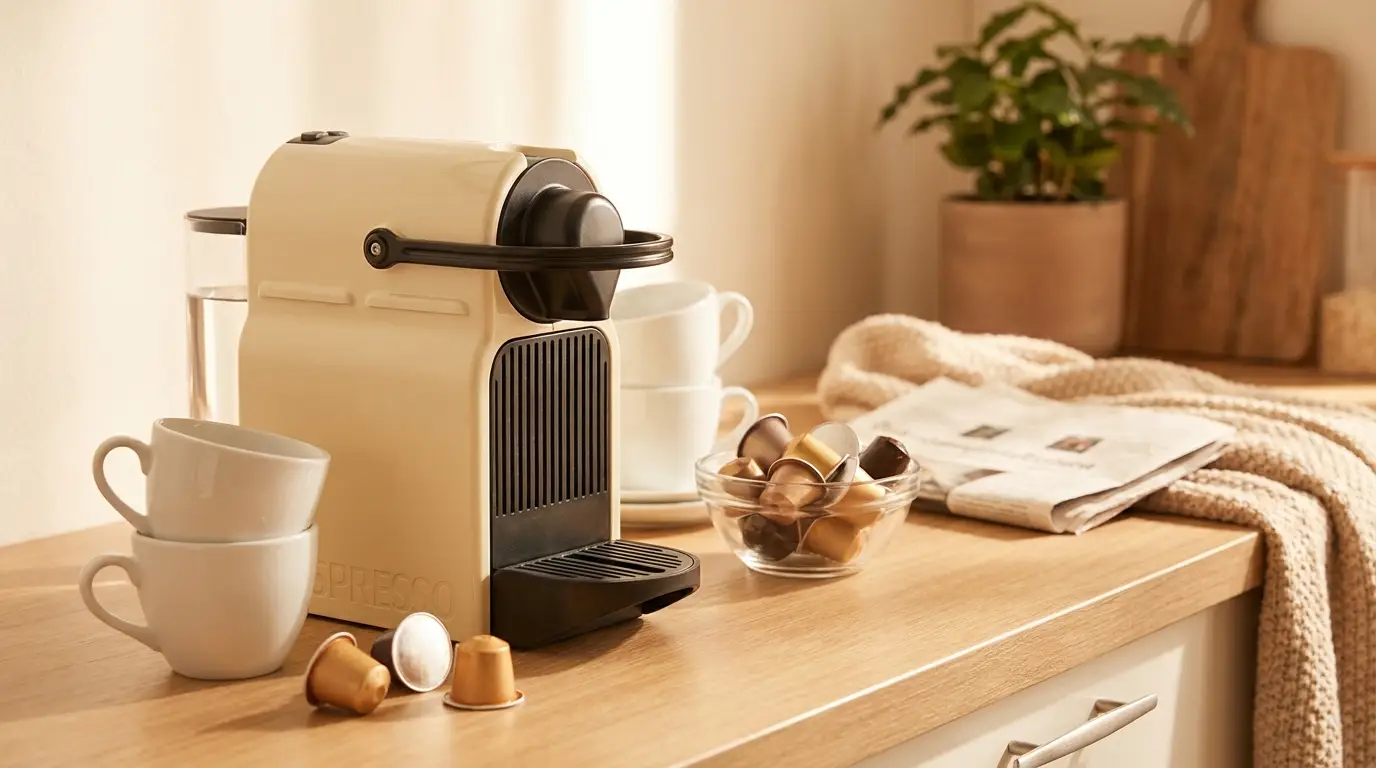
ป้ายกำลังไฟหลังเครื่องชงกาแฟแคปซูลเขียนว่า 1,200–1,500 วัตต์ ตัวเลขนี้ทำให้หลายคนกังวลว่าซื้อมาแล้วค่าไฟจะพุ่ง ความจริงต้องดูว่าเครื่องใช้กำลังนั้นนานแค่ไหน ซึ่งคำตอบคือไม่กี่สิบวินาทีต่อแก้ว
เครื่องกินไฟตอนไหนบ้าง
- ต้มน้ำตอนเปิดเครื่อง — ใช้กำลังเต็มราว 25–40 วินาที นี่คือส่วนที่กินไฟมากที่สุด
- ปั๊มน้ำตอนชง — ราว 20–40 วินาทีต่อแก้ว กำลังไฟต่ำกว่าตอนต้ม
- รักษาอุณหภูมิ — ถ้าเปิดเครื่องทิ้งไว้ จะอุ่นซ้ำเป็นระยะ
- สแตนด์บาย — เครื่องรุ่นใหม่ปิดเองใน 9 นาที แทบไม่กินไฟ
คำนวณค่าไฟต่อแก้ว
คิดแบบเผื่อสูง: ต้มน้ำ 40 วินาที + ชง 40 วินาที ที่ 1,400 วัตต์ ใช้ไฟราว 0.03 หน่วย ค่าไฟบ้านราว 4.5 บาทต่อหน่วย ⇒ ค่าไฟต่อแก้วประมาณ 0.14 บาท น้อยกว่าราคาแคปซูลเองหลายสิบเท่า
| การใช้งาน | แก้วต่อเดือน | ค่าไฟต่อเดือน (ประมาณ) |
|---|---|---|
| คนเดียว วันละแก้ว | 30 | ราว 4–5 บาท |
| บ้าน 2 คน วันละ 2–3 แก้ว | 75 | ราว 10–12 บาท |
| ออฟฟิศเล็ก วันละ 15 แก้ว | 330 | ราว 45–50 บาท |
| เปิดเครื่องทิ้งไว้ทั้งวันไม่ปิดเอง | — | เพิ่มอีกราว 30–60 บาท |
ตัวเลขเหล่านี้ยังไม่ถึงค่ากาแฟร้านแก้วเดียว ดูต้นทุนเต็ม ๆ ที่บทความต้นทุนต่อแก้ว
เสียบปลั๊กทิ้งไว้ได้ไหม
ได้ เครื่องชงแคปซูลรุ่นปัจจุบันมีระบบปิดอัตโนมัติหลังไม่ใช้งาน 9 นาที ถึง 30 นาทีแล้วแต่รุ่น ตอนปิดแล้วกินไฟน้อยมากจนวัดแทบไม่ได้ สิ่งที่ไม่ควรทำคือตั้งค่าให้เครื่องไม่ปิดเอง เพราะมันจะอุ่นน้ำซ้ำทั้งวัน นั่นคือแถวสุดท้ายในตารางด้านบน
เคล็ดลับประหยัดไฟที่ได้ผลจริง
- ชงหลายแก้วติดกันในรอบเดียว แทนเปิดเครื่องใหม่ทุกครั้ง เพราะการต้มน้ำรอบแรกคือตัวกินไฟหลัก
- ล้างตะกรันตามกำหนด เครื่องที่มีตะกรันต้องใช้เวลาต้มนานขึ้น ดูที่บทความล้างตะกรัน
- ถ้าไม่ใช้เป็นสัปดาห์ เช่นไปเที่ยว ถอดปลั๊กได้ ไม่มีผลเสียกับเครื่อง
สรุป
ค่าไฟของเครื่องชงกาแฟแคปซูลอยู่ที่ราวแก้วละ 0.1–0.2 บาท เดือนละไม่ถึงสิบบาทสำหรับบ้านทั่วไป เสียบทิ้งไว้ได้ตราบใดที่ระบบปิดอัตโนมัติยังเปิดอยู่ ตัวแปรที่มีผลกับค่าใช้จ่ายจริงคือราคาแคปซูล ไม่ใช่ค่าไฟ เทียบราคาต่อแคปซูลได้ที่หน้าแพ็กเกจ
The label on the back of a capsule coffee machine says 1,200–1,500 watts, and that number worries people about their electricity bill. What matters is how long the machine draws that power, and the answer is a few dozen seconds per cup.
When the machine actually uses power
- Heating up on switch-on — full power for about 25–40 seconds; this is the biggest draw
- Pumping during brewing — 20–40 seconds per cup, at lower power than heating
- Keeping warm — if left on, it reheats periodically
- Standby — modern machines auto-off after 9 minutes and draw almost nothing
Cost per cup
Being generous: 40 seconds heating plus 40 seconds brewing at 1,400 W is about 0.03 kWh. At a typical Thai household rate of around 4.5 baht per unit, that is roughly 0.14 baht per cup, dozens of times less than the capsule itself.
| Usage | Cups per month | Electricity per month (approx.) |
|---|---|---|
| One person, one cup a day | 30 | About 4–5 baht |
| Two people, 2–3 cups a day | 75 | About 10–12 baht |
| Small office, 15 cups a day | 330 | About 45–50 baht |
| Left on all day with auto-off disabled | — | Add roughly 30–60 baht |
None of this reaches the price of a single café coffee. See the full picture in our cost per cup article.
Can I leave it plugged in?
Yes. Current capsule machines switch off automatically after 9 to 30 minutes of inactivity depending on the model, and once off they draw a barely measurable amount. What you should not do is disable auto-off, because the machine will then reheat water all day. That is the last row of the table above.
Savings that actually work
- Brew several cups back to back rather than switching on fresh each time; the initial heat-up is the main cost
- Descale on schedule, since a scaled machine takes longer to heat. See our descaling guide
- Away for a week? Unplugging is fine and does the machine no harm
Summary
A capsule machine costs about 0.1–0.2 baht per cup in electricity, under ten baht a month for a typical household. Leave it plugged in as long as auto-off is enabled. The variable that really drives your cost is the capsule price, not the power. Compare per-capsule pricing on our packages page.