 Capresso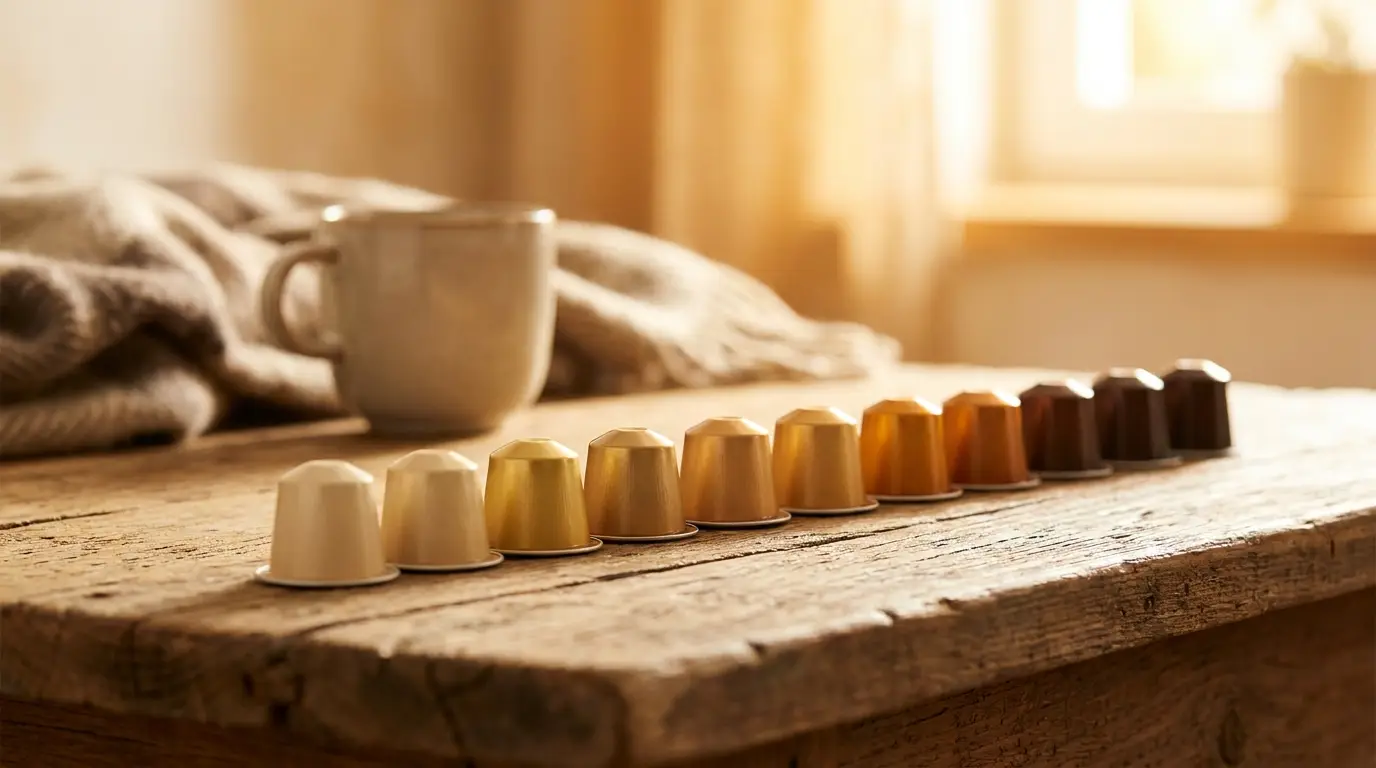
หยิบกล่องกาแฟแคปซูลขึ้นมาจะเห็นตัวเลข เช่น "Intensity 8" หรือ "ความเข้ม 11" หลายคนเข้าใจผิดว่ายิ่งเลขสูง = คาเฟอีนยิ่งแรง ความจริงไม่ใช่เลย บทความนี้อธิบายว่าเลขนี้หมายถึงอะไรจริง ๆ และช่วยคุณเลือกเบอร์ที่ตรงกับรสที่ชอบ
Intensity ไม่ใช่คาเฟอีน
ตัวเลขความเข้ม (Intensity) เป็นสเกลที่ผู้ผลิตใช้บอก "ความเข้มของรสชาติและบอดี้" ไม่ใช่ปริมาณคาเฟอีน โดยรวมแล้วมันสะท้อนระดับการคั่วเป็นหลัก — คั่วยิ่งเข้ม รสยิ่งหนัก ขม บอดี้แน่น เลขก็ยิ่งสูง ที่น่าแปลกคือกาแฟคั่วเข้ม (เลขสูง) มักมีคาเฟอีนน้อยกว่าคั่วอ่อนเล็กน้อยด้วยซ้ำ เพราะความร้อนตอนคั่วสลายคาเฟอีนไปบางส่วน (อ่านเรื่องคาเฟอีนละเอียดในบทความคาเฟอีนในแคปซูล)
เลข 1–13 ต่างกันยังไง
| ช่วงเลข | รสชาติโดยรวม | เหมาะกับ |
|---|---|---|
| 1–4 (อ่อน) | นุ่ม บาง เปรี้ยวสดใส กลิ่นดอกไม้/ผลไม้ | คนชอบกาแฟเบา ดื่มลองโก้ ดื่มเช้าสบาย ๆ |
| 5–7 (กลาง) | สมดุล กลมกล่อม หวานคาราเมล | ดื่มได้ทั้งวัน เข้ากับนมก็ได้ ดำก็ดี |
| 8–10 (เข้ม) | บอดี้แน่น ขมนุ่ม ช็อกโกแลต ถั่วคั่ว | คนชอบเอสเพรสโซเข้ม ทำลาเต้/คาปูชิโน่ |
| 11–13 (เข้มจัด) | เข้มหนัก ขมลึก ครีมาหนา | คอกาแฟเข้ม ดื่มดำ ตื่นเต็มตา |
เลือกเบอร์ไหนดี
ไม่มีเบอร์ที่ "ดีที่สุด" มีแต่เบอร์ที่ "ตรงคอคุณที่สุด" — ลองใช้แนวทางนี้:
- ชอบกาแฟร้านสะดวกซื้อ/อเมริกาโนบาง ๆ → เริ่มเบอร์ 5–7
- ดื่มลาเต้/คาปูชิโน่ → เบอร์ 8–10 เพราะรสกาแฟต้องดันผ่านนมให้ได้ (ดูวิธีทำในบทความลาเต้ไม่ใช้เครื่องตีฟอง)
- ชอบเอสเพรสโซเข้ม ๆ ดำ ๆ → เบอร์ 11 ขึ้นไป
- ยังไม่แน่ใจ → เริ่มกลาง ๆ เบอร์ 7–8 แล้วค่อยขยับ
เคล็ดลับ: ถ้ากาแฟเบอร์สูงขมไป ให้เพิ่มน้ำ (โหมด Lungo) หรือเติมนม จะนุ่มลงทันทีโดยไม่ต้องเปลี่ยนแคปซูล
ความเข้มของ Capresso
กาแฟแคปซูลของ Capresso มีให้เลือกครบทุกช่วงความเข้ม ตั้งแต่รสนุ่มดื่มง่ายไปจนถึงดาร์กเข้มจัด คั่วบดสดจากเมล็ดไทยดอยปางขอนและบราซิล ดูคำอธิบายรสและความเข้มแต่ละตัวได้ที่ไกด์รสชาติ หรือเลือกเลยที่หน้ารสชาติทั้ง 8
สรุป
เลขความเข้ม (Intensity) บอก "ความหนักของรสและบอดี้" ตามระดับการคั่ว ไม่ใช่คาเฟอีน เลขต่ำ = นุ่มเปรี้ยวสดใส เลขสูง = เข้มขมบอดี้แน่น เลือกจากรสที่คุณชอบและเมนูที่ทำบ่อย ไม่ต้องกลัวเลขสูงว่าจะแรงเกินไป
Pick up a box of coffee capsules and you'll see a number like "Intensity 8". Many assume higher number = stronger caffeine. It doesn't. Here's what the number really means and how to choose the one that matches your taste.
Intensity isn't caffeine
The intensity scale is how makers describe flavor strength and body, not caffeine content. It mostly reflects roast level — darker roast means heavier, more bitter, fuller body and a higher number. Counterintuitively, dark roasts (high numbers) often have slightly less caffeine than light ones, because roasting heat breaks some down (details in our caffeine guide).
How 1–13 differ
| Range | Flavor | Best for |
|---|---|---|
| 1–4 (light) | Soft, delicate, bright acidity, floral/fruity | Light-coffee lovers, lungo, easy mornings |
| 5–7 (medium) | Balanced, rounded, caramel sweetness | All-day drinking, good black or with milk |
| 8–10 (strong) | Full body, smooth bitterness, chocolate, roasted nuts | Strong espresso, latte/cappuccino |
| 11–13 (very strong) | Heavy, deep bitterness, thick crema | Dark-coffee lovers, black, full wake-up |
Which number should you pick?
There's no "best" number, only the one that fits your palate:
- Like mild convenience-store coffee / thin americano → start 5–7
- Drink latte/cappuccino → 8–10, so coffee taste cuts through milk (see our latte without a frother guide)
- Love strong black espresso → 11 and up
- Not sure → start mid at 7–8 and adjust
Tip: if a high number is too bitter, add water (Lungo) or milk — it softens instantly without changing capsules.
Capresso's intensity range
Capresso capsules cover the whole range, from smooth and easy to intense dark — freshly roasted from Thai Doi Pangkhon and Brazilian beans. See each flavor and its intensity in our flavor guide, or browse all 8 flavors.
Bottom line
Intensity describes flavor and body weight by roast level — not caffeine. Low = soft and bright, high = bold and full-bodied. Choose by the taste you like and the drinks you make most, and don't fear the high numbers.